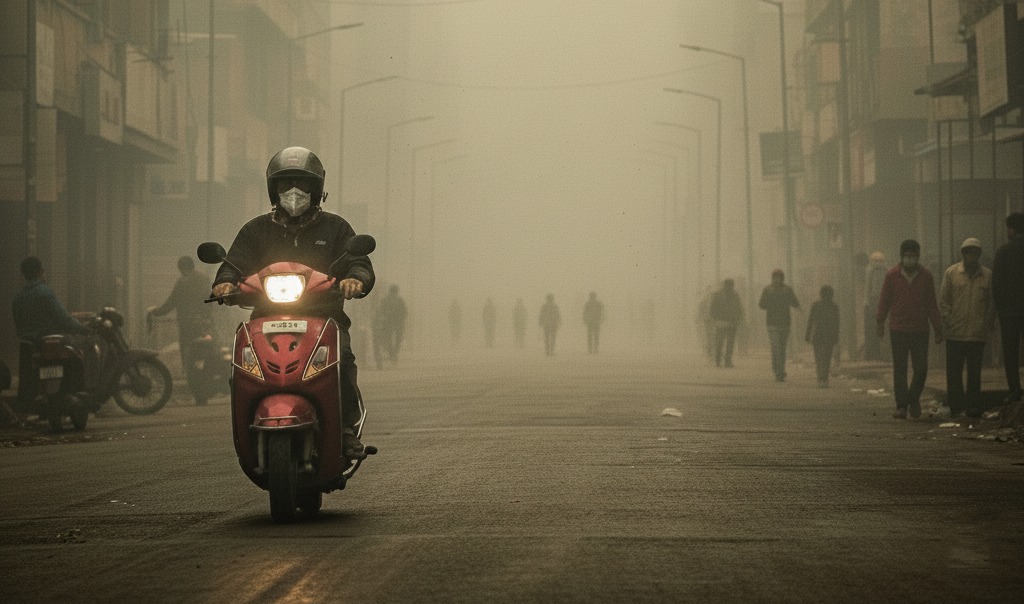
As winter settles in, Mumbai once again wakes up to grey skies, itchy throats and burning eyes. The city’s Air Quality Index (AQI) has been hovering between Unhealthy to Severe levels, placing Mumbai among the most polluted major cities globally this season. On December 3, some stations even recorded AQI levels around 195 with spikes crossing 256–277 in areas like Wadala and BKC, according to recent reports. With winter settling in, every breath in the city now comes with a warning.
Residents are frantically searching online — “Mumbai air quality today,” “Is it safe to go outdoors?”, “best mask for Mumbai pollution”, “asthma treatment in Andheri” — indicating how deeply this crisis is being felt.
Why Winter Makes Mumbai’s Air Worse
Winters are beautiful, but for Mumbai’s lungs, this season is the toughest. Cooler air sits lower to the ground and creates temperature inversions, trapping pollutants like PM2.5 and PM10 close to the breathing zone. With little rain to wash dust away and continuous emissions from traffic, construction and industry, toxic air simply hangs over the city like a blanket.
And it is this fine particulate matter — invisible to the eye — that poses the biggest threat. PM2.5 particles are so tiny they slip deep into the lungs and bloodstream, leading to respiratory irritation, inflammation and long-term damage.
What This Means for Your Health
Poor air quality doesn’t just cause discomfort — it can severely impact respiratory health. People with asthma, COPD, bronchitis, heart disease, as well as children and the elderly, face a much higher risk of complications. Many residents are reporting symptoms like persistent coughing, wheezing, breathlessness, headache, fatigue and throat irritation. Search trends show a spike in queries like “Does air pollution trigger asthma?”, and unfortunately, the answer is yes — pollution is a major trigger that can lead to asthma attacks and COPD flare-ups.
Even healthy individuals aren’t fully safe. Long-term exposure increases the risk of chronic lung disease, reduced lung capacity and cardiovascular problems. In simple terms — this is not just about smoggy skies, it’s about the air entering your lungs every second.
How to Protect Yourself Right Now
Until pollution levels fall, prevention is your best defence. The most effective step is to limit outdoor exposure, especially during early mornings and late evenings when pollution stays concentrated. If stepping out is unavoidable, using a proper protective mask like N95 or KN95 is crucial — cloth masks cannot filter harmful particulate matter.
At home, ensure cleaner indoor air by avoiding incense, smoking and aerosol sprays. An air purifier can help in bedrooms and living areas, especially for those with respiratory problems. Staying hydrated, using steam inhalation when needed, and maintaining doctor-prescribed inhalers or medication can also reduce irritation caused by polluted air.
If you or your child has asthma, keep a rescue inhaler accessible at all times. Parents are increasingly searching “Is Mumbai’s air dangerous for kids?” — and unfortunately, children are among the most vulnerable because their lungs are still developing.
When Should You See a Doctor?
Do not ignore symptoms like tightness in chest, inability to breathe deeply, persistent cough, wheezing, worsening asthma attacks, or fatigue that doesn’t improve. If symptoms escalate even slightly, seek medical help immediately. Timely treatment can prevent respiratory distress or complications. Residents in Andheri and nearby areas often look for lung specialists and asthma treatment facilities during winter peaks — and medical professionals strongly recommend early intervention rather than waiting for symptoms to worsen.
Mumbai Needs Clean Air — But Until Then, We Must Stay Alert
Mumbai’s pollution won’t disappear overnight, but with awareness and personal care, we can reduce immediate health risks. Wearing masks, reducing outdoor exposure, maintaining medications, protecting children and the elderly — these small steps can make a big difference in how our bodies cope with toxic air.
This winter, let breathing well be your priority. Check AQI updates regularly, stay equipped and do not hesitate to reach out for medical care when needed. Good lungs are not replaceable — protect them today.